Trends in Secure Asset Transfers for Mixed Football and Virtual Table Game Platforms in Britain
Written by Anna Otto · Sep 20, 2026
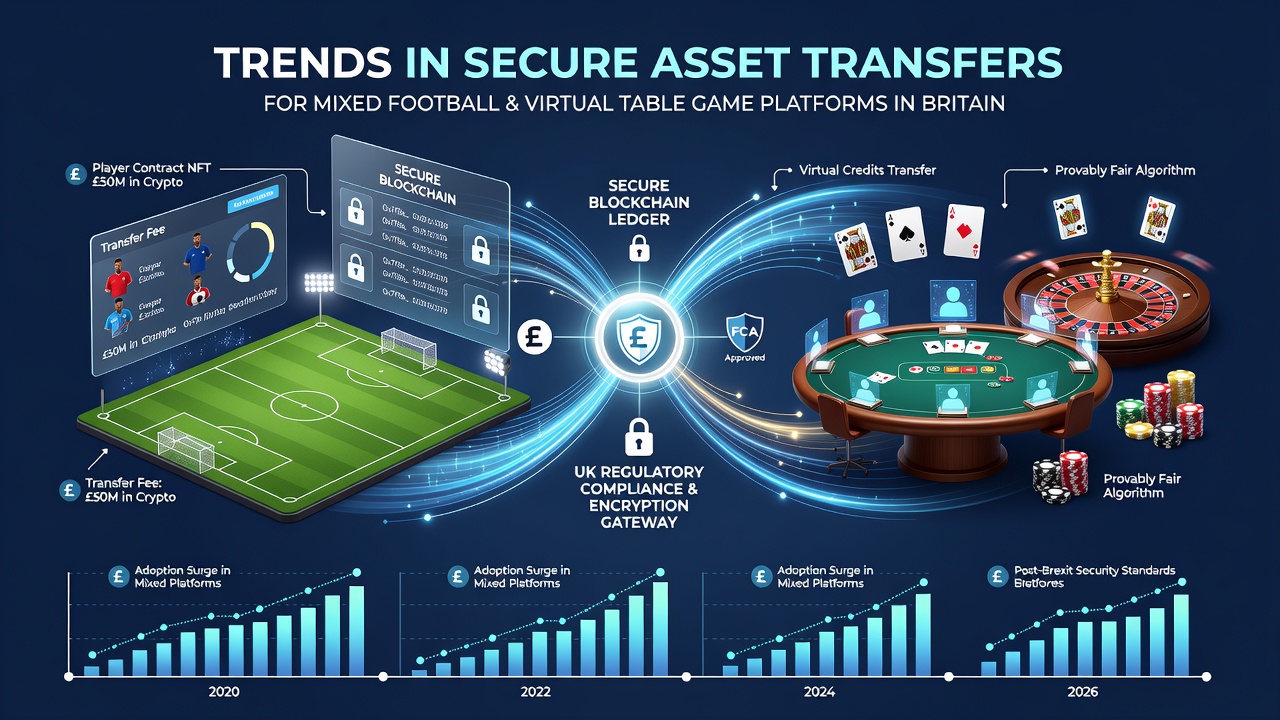
Trends in Secure Asset Transfers for Mixed Football and Virtual Table Game Platforms in Britain
Platforms in Britain that blend football betting options with virtual table games continue to refine how users move funds, and observers note a steady push toward layered encryption alongside real-time monitoring tools that flag unusual activity before it escalates. Data from industry reports shows these combined environments handle higher transaction volumes than single-focus sites, which in turn drives investment in protocols capable of scaling without introducing delays.
Shift Toward Multi-Layer Authentication
Operators have rolled out systems that require biometric checks paired with device recognition and one-time codes, creating sequences that verify identity at multiple points during a transfer. Researchers tracking adoption rates found that by early 2026 most major British platforms had integrated at least two of these layers, while several added a third for transfers above a certain threshold. This approach reduces the window for unauthorised access because each stage operates independently, and any mismatch triggers an immediate hold rather than allowing partial completion.
What's interesting is how these authentication steps now run in the background for repeat users, storing encrypted profiles that speed up future sessions without lowering the security bar. Figures from European industry associations indicate processing times dropped by roughly fifteen percent even as verification depth increased, which keeps the experience smooth for players moving between football markets and virtual table rounds.
Blockchain Integration and Tokenised Assets
Blockchain ledgers appear more frequently in asset transfer pipelines, particularly where operators want immutable records of each step from deposit to withdrawal. Several platforms began testing tokenised versions of fiat balances in 2025, and those pilots expanded through September 2026 as transaction speeds on certain networks improved. The distributed nature of these ledgers means no single point holds the full record, which limits the impact if one server experiences a breach.
Studies conducted by academic groups in Canada highlight that tokenisation also simplifies reconciliation across different game types, since both football and virtual table transactions sit on the same chain structure. Operators report fewer discrepancies during audits because every entry carries a timestamp and digital signature that cannot be altered retroactively. Yet the transition still requires careful calibration so that peak-hour volumes do not create bottlenecks on the network.

Real-Time Fraud Detection and AI Monitoring
Artificial intelligence models now scan transfer patterns continuously, comparing each movement against historical baselines for the same account and similar user segments. When anomalies surface, the system can pause the transaction and prompt additional verification instead of rejecting it outright. European Betting and Gaming Association data from 2026 shows platforms using these models recorded a measurable decline in disputed transfers compared with earlier rule-based filters alone.
Teams responsible for these systems update the models weekly with fresh data, incorporating new tactics observed in attempted fraud cases across the sector. Because football and virtual table games attract slightly different user behaviours, separate sub-models handle each category while sharing core fraud indicators. This dual-track setup allows faster adaptation when one segment experiences a spike in suspicious activity.
Cross-Border Considerations and Compliance Tools
Many British users maintain accounts that accept deposits from multiple jurisdictions, which adds complexity to compliance checks. Platforms therefore embed automated tools that cross-reference transaction details against international watchlists and sanctions databases before releasing funds. These tools operate in parallel with domestic requirements, creating a single workflow that satisfies several regulatory frameworks without forcing users to navigate separate processes.
Industry reports note that the September 2026 timeframe brought incremental updates to these compliance engines, mainly around faster API connections to external databases. The result is shorter hold times for legitimate transfers that previously sat in review queues for manual checks. Observers tracking platform performance found that the combination of automated screening and selective human review kept error rates low while maintaining throughput during busy periods such as major football tournaments.
Conclusion
Secure asset transfer methods on British platforms that mix football and virtual table games continue to evolve through layered authentication, blockchain records, and AI-driven monitoring. Data gathered through 2026 indicates these measures support higher volumes while addressing fraud risks that arise in combined environments. As technology matures, further refinements in speed and cross-border handling are expected to follow the patterns already visible in current implementations.